Control faster
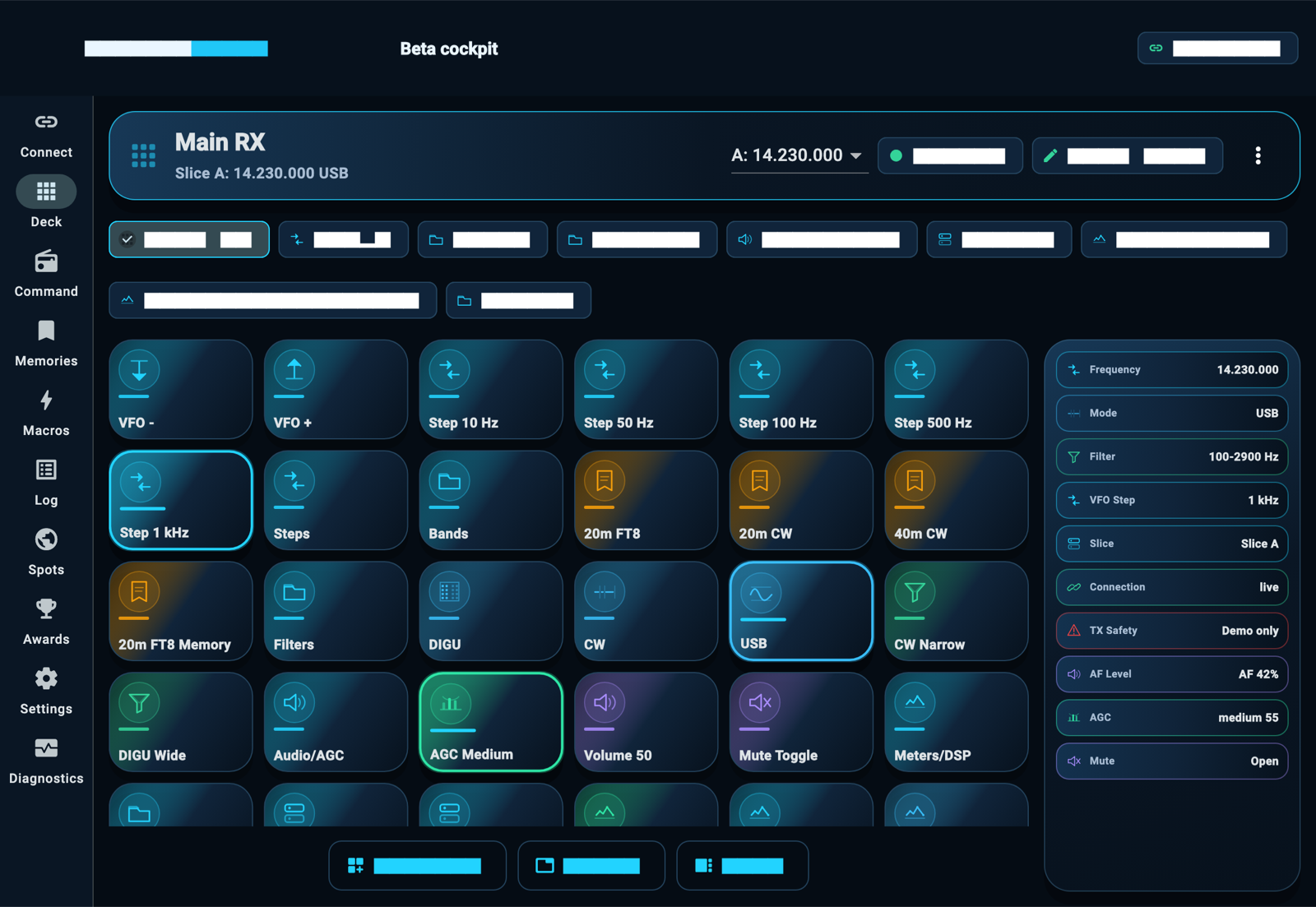
Deck tiles put bands, modes, filters, VFO steps, audio, AGC, memories, RX macros, and diagnostics within reach.
 StationPilot
Control-first. Context-aware. Safety-gated.
Fast RX/control workflows, spot intelligence, Wavelog context, award chasing, and safety-first Deck controls in one clean mobile interface.
What StationPilot does
StationPilot complements SmartSDR, Maestro, or another visual radio client by keeping repeatable station actions, spots, awards, diagnostics, and setup context close at hand.
Deck tiles put bands, modes, filters, VFO steps, audio, AGC, memories, RX macros, and diagnostics within reach.
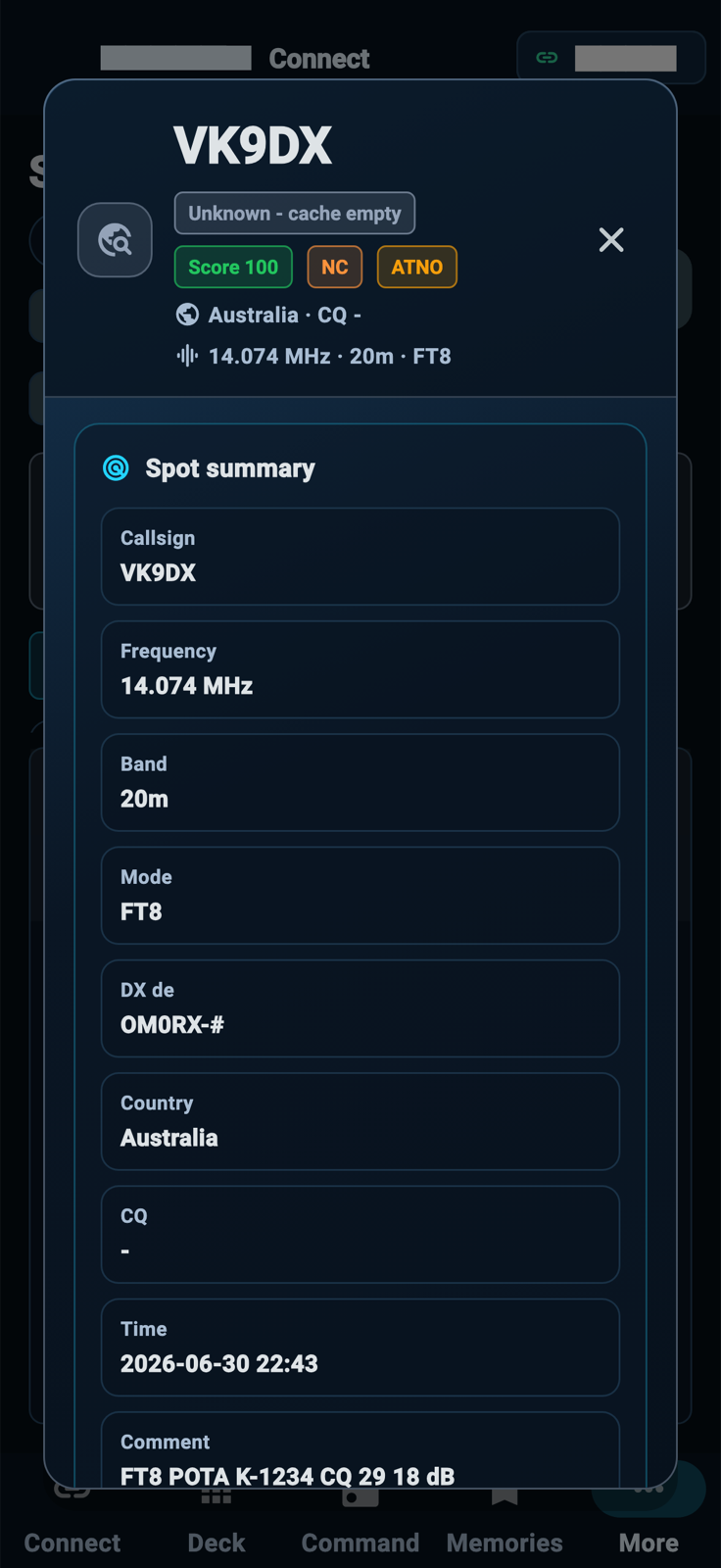
Spot detail combines callsign, band, mode, path context, history, and worked-before awareness.
POTA, SOTA, WWFF, WWBOTA, Parks n Peaks, and custom reference parsing support fast review.
When configured, Wavelog helps separate new, worked, and confirmed opportunities.
Release-facing Deck actions show ready, disabled, blocked, or display-only state before execution.
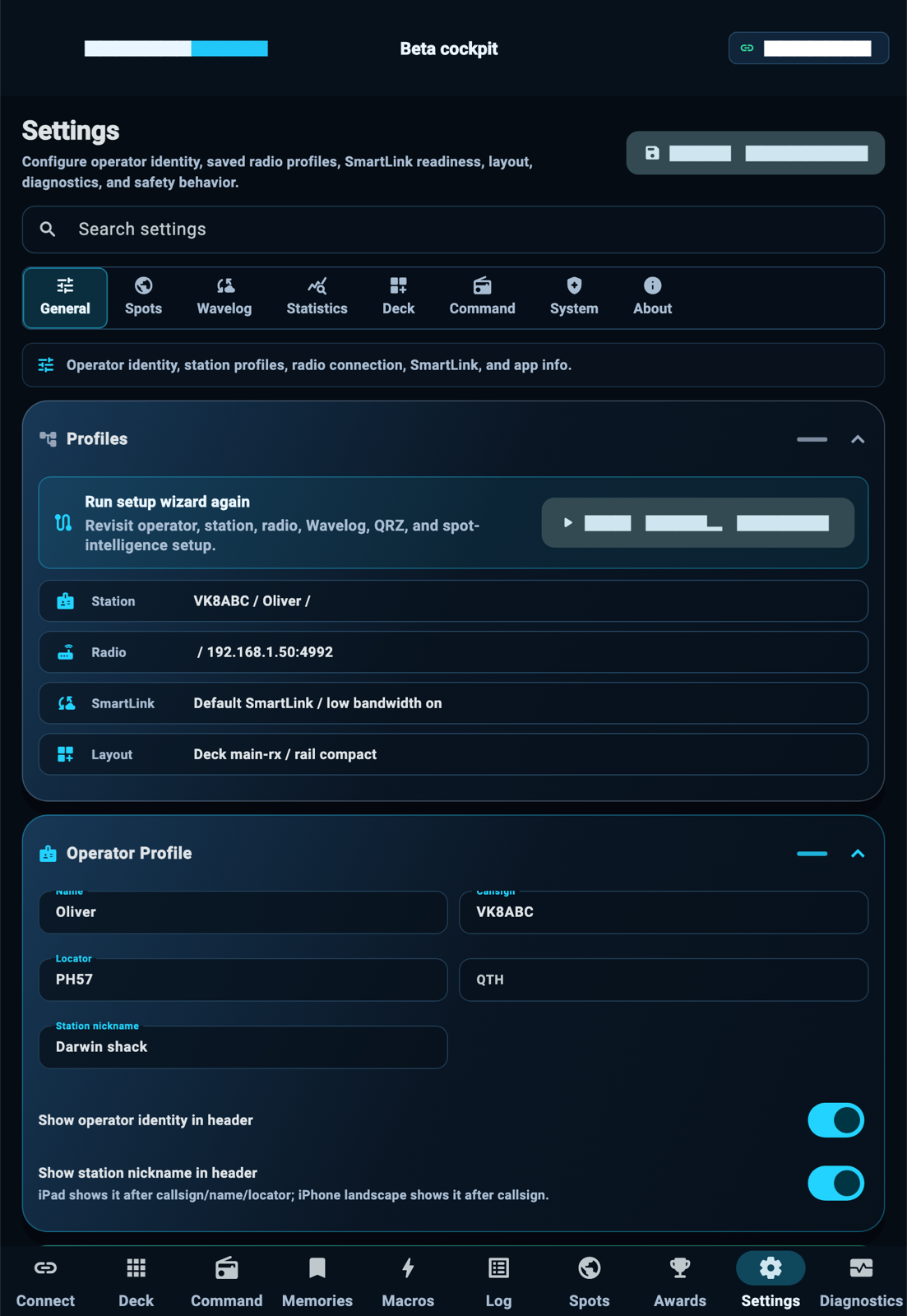
Redacted diagnostics and readiness checks help troubleshoot without exposing secrets.
Screenshots
The homepage uses a small optimized subset of deterministic Phase 10L screenshots so the page stays fast and focused.
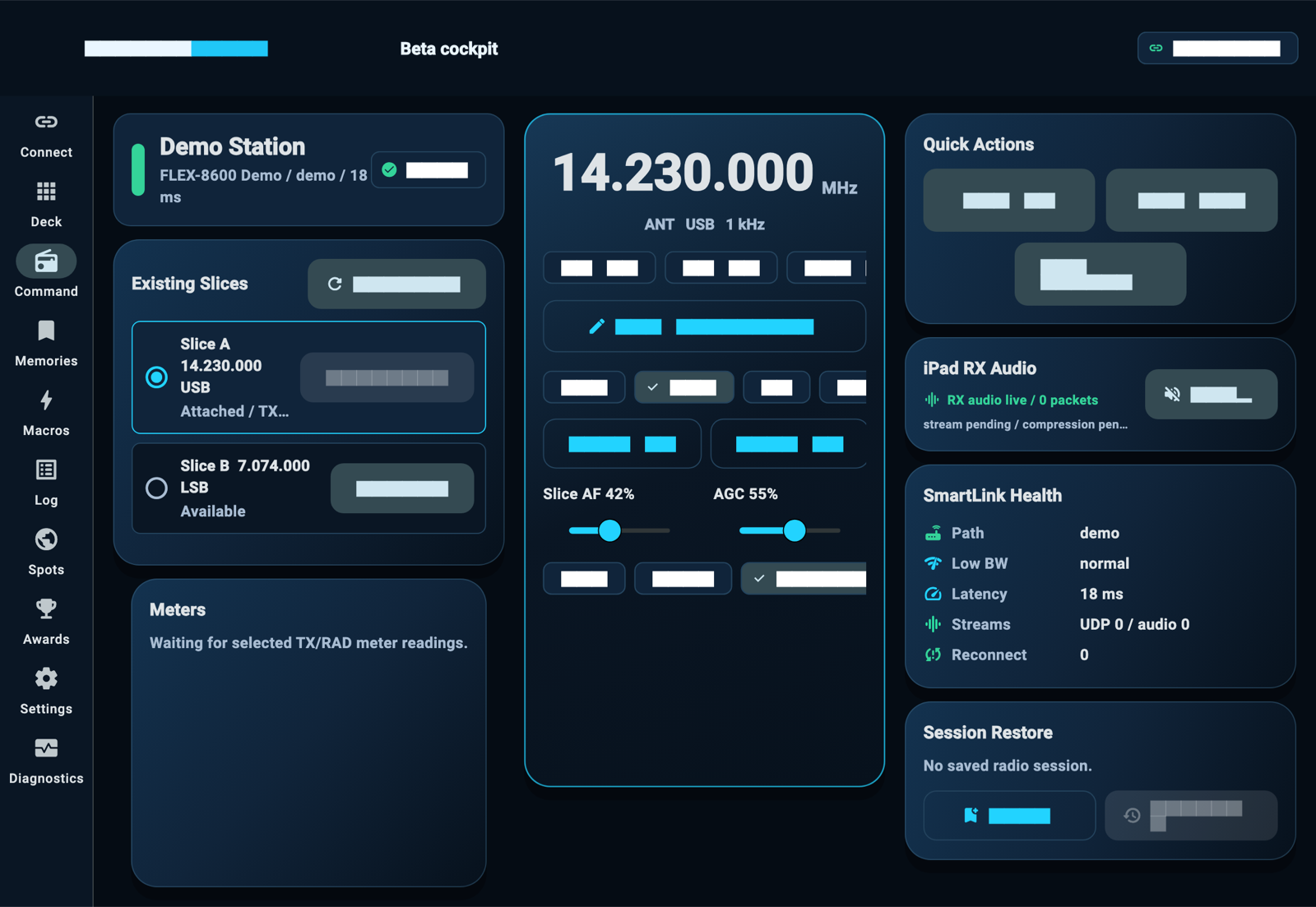
Command VFO workflows keep frequency, band, mode, and tuning controls visible.
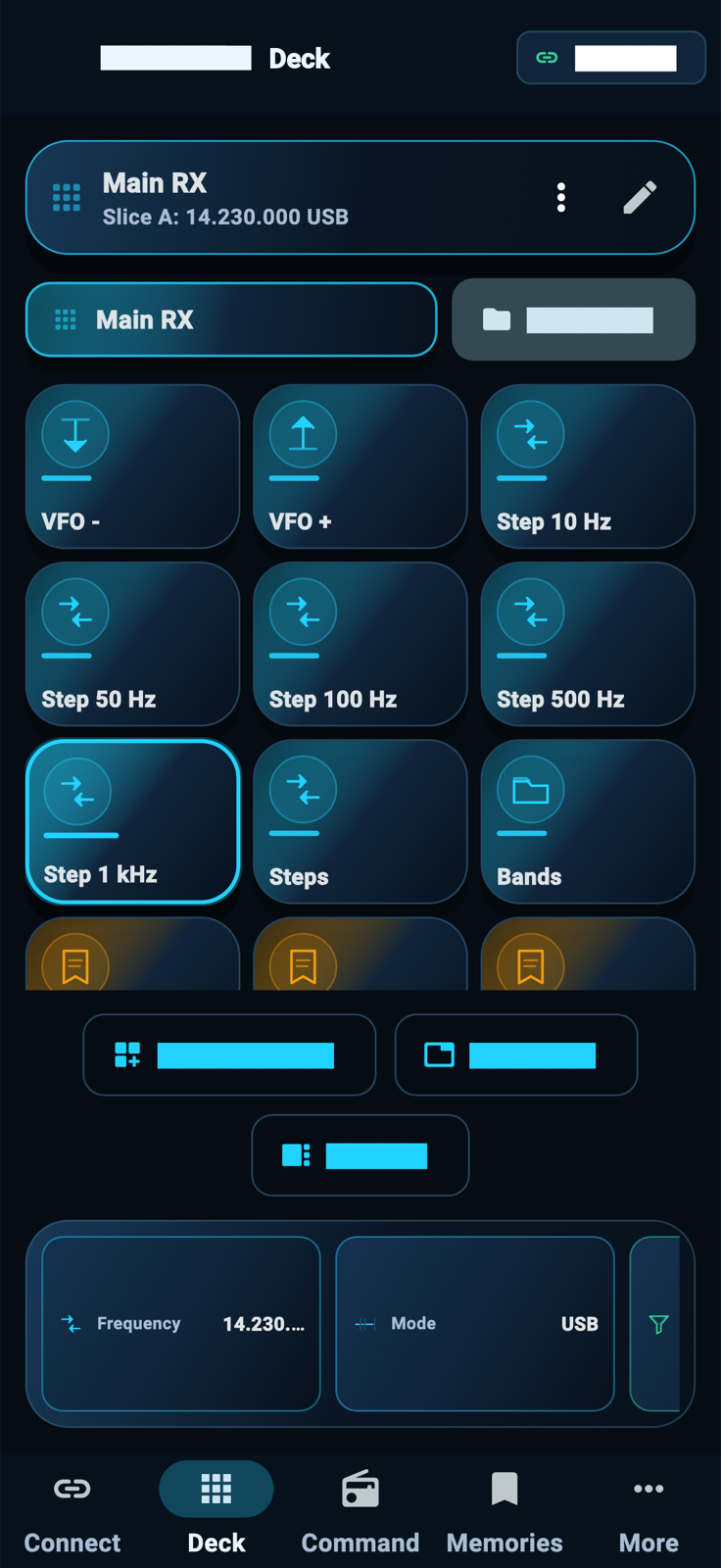
Fast phone access to common station actions and status.
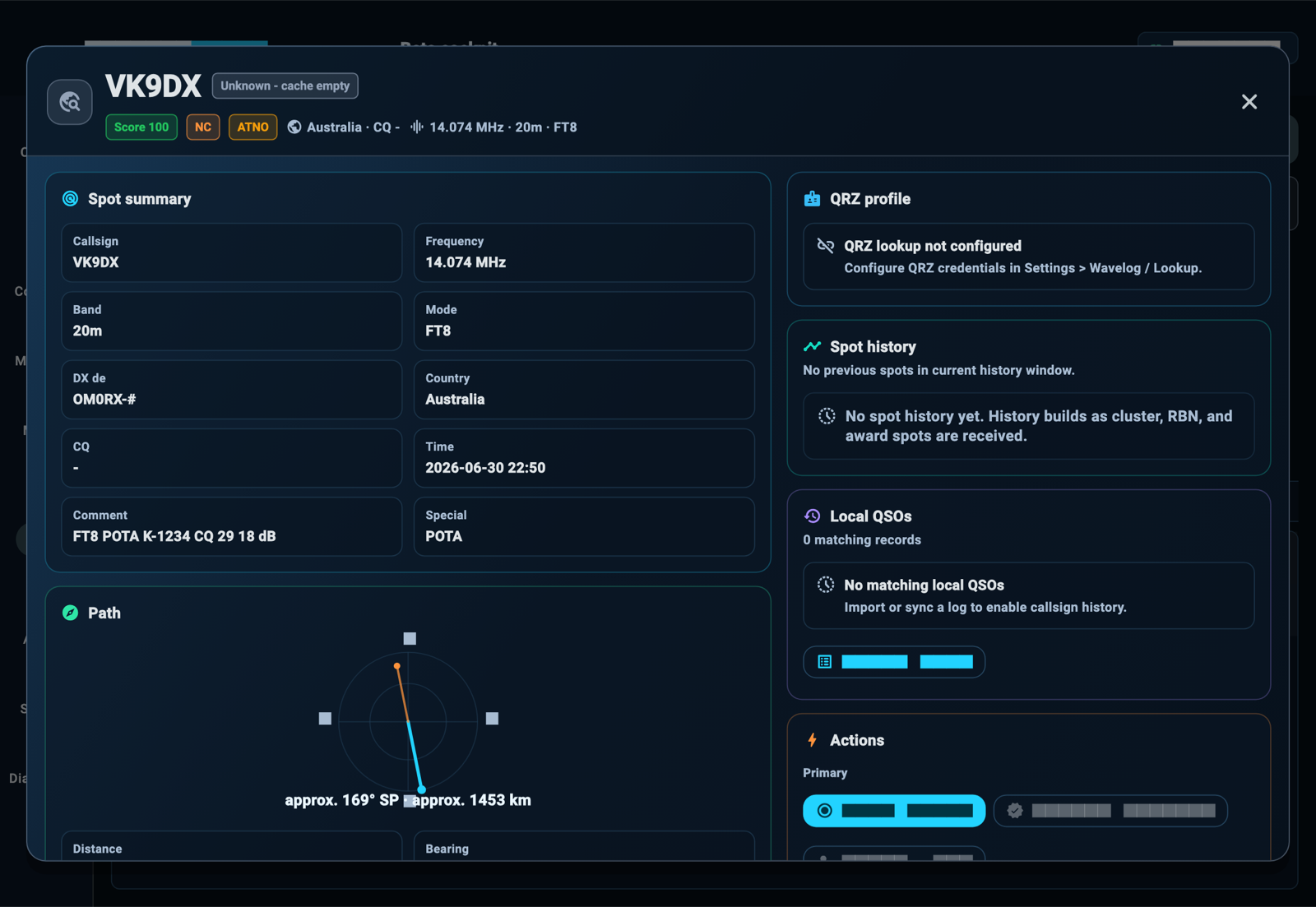
Path, history, and Wavelog context help explain why a spot matters.
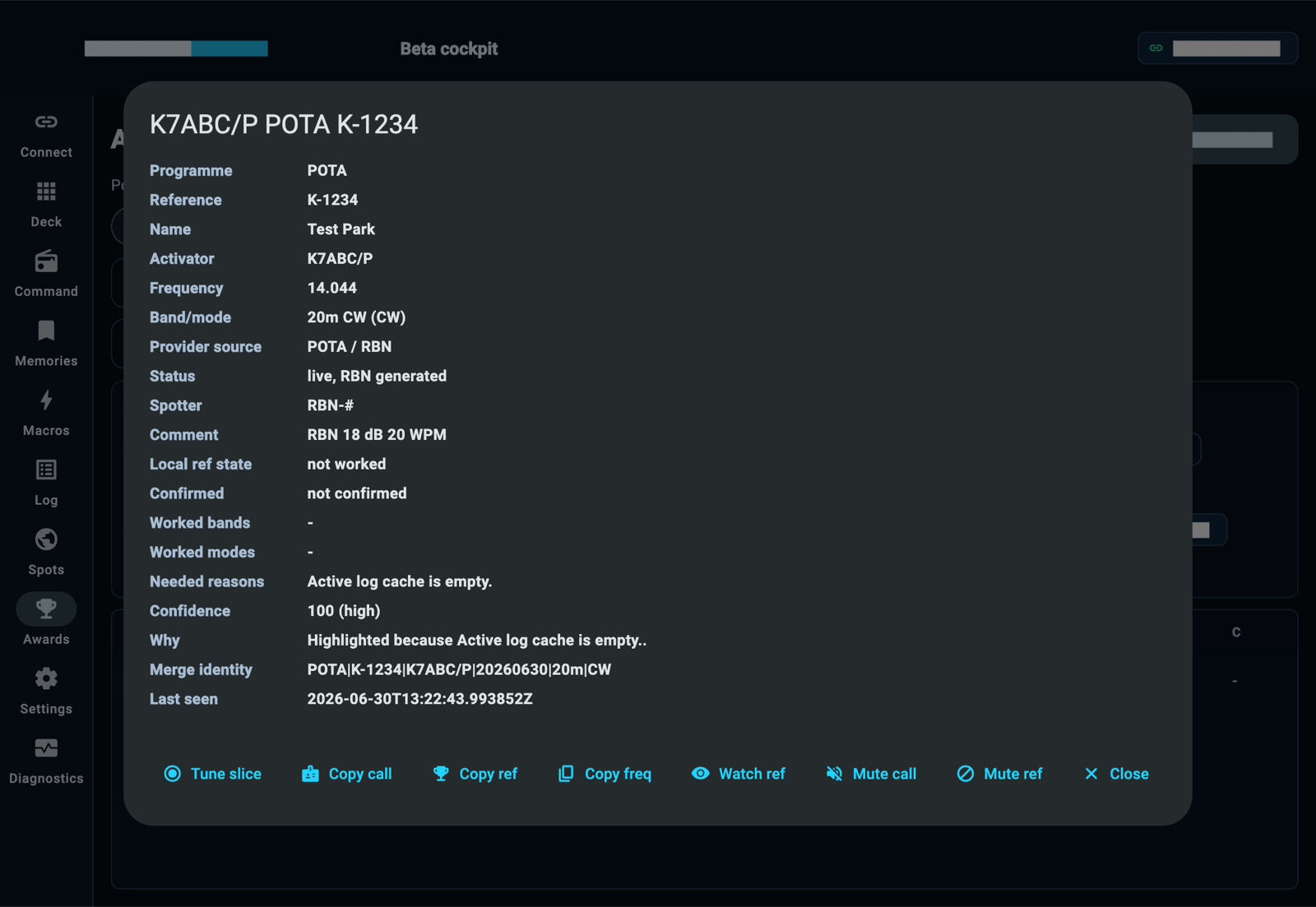
Reference details stay close to the operating workflow.
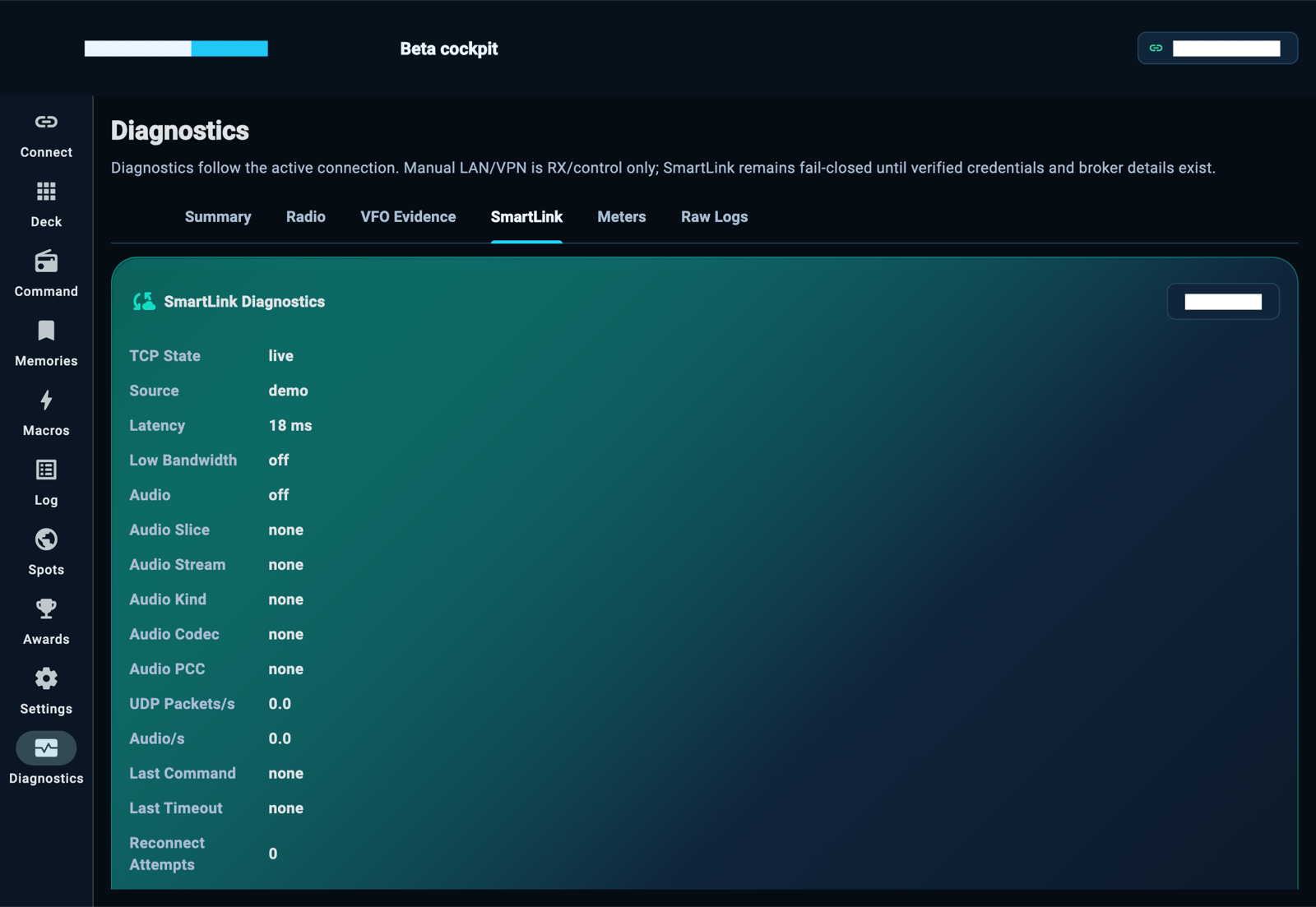
Readiness checks and redacted diagnostics support serious station troubleshooting.
Deck controls
Deck gives operators fast access to VFO stepping, band changes, mode and filter presets, audio/AGC controls, safe memories, RX macros, diagnostics, and local queue control.
Default release-facing Deck workflows keep TX-risk controls hidden or blocked. Visible controls report state before execution, so the operator sees whether an action is ready, disabled, blocked, or display-only.
Spot intelligence
StationPilot turns a raw cluster line into a practical operating decision: who is on, where they are, what band and mode they are using, whether you have worked or confirmed them before, and why the spot may matter.
Spot detail views can surface path context, distance and bearing notes where available, spot history, Wavelog matrix context, and QRZ readiness when configured.
Awards
StationPilot supports workflows around POTA, SOTA, WWFF, WWBOTA, Parks n Peaks, and custom reference parsing. Award context is presented as operator intelligence, not as an official affiliation claim.
Wavelog and QRZ
When configured, Wavelog helps separate new, worked, and confirmed opportunities. QRZ-ready credential handling prepares callsign enrichment without exposing credentials in ordinary exports.
Safety and privacy
StationPilot is built as an RX/control cockpit and station workflow layer. It is cautious about live-radio behavior and explicit about what the release workflow blocks.
The product focuses on repeatable control and operator context, not panadapter, waterfall, DAX, CAT, or audio streaming features.
High-risk actions are hidden or blocked in the current release workflow unless they are validated and explicitly available.
Deck tiles show ready, disabled, blocked, or display-only behavior before execution.
Operators remain responsible for licensing, station configuration, legal operation, and safe radio behavior.
Support exports are designed to redact sensitive values such as tokens, keys, emails, serial numbers, and IP addresses where possible.
The current release candidate does not include advertising SDKs, tracking SDKs, or third-party analytics SDKs.
About the developer
StationPilot is developed by Oliver Bross, OM0RX, an amateur radio operator licensed since 2000. It grew from real remote-station, DXing, CW, digital-mode, contesting, and award-chasing workflows.
Independent project. Not affiliated with FlexRadio Systems.